
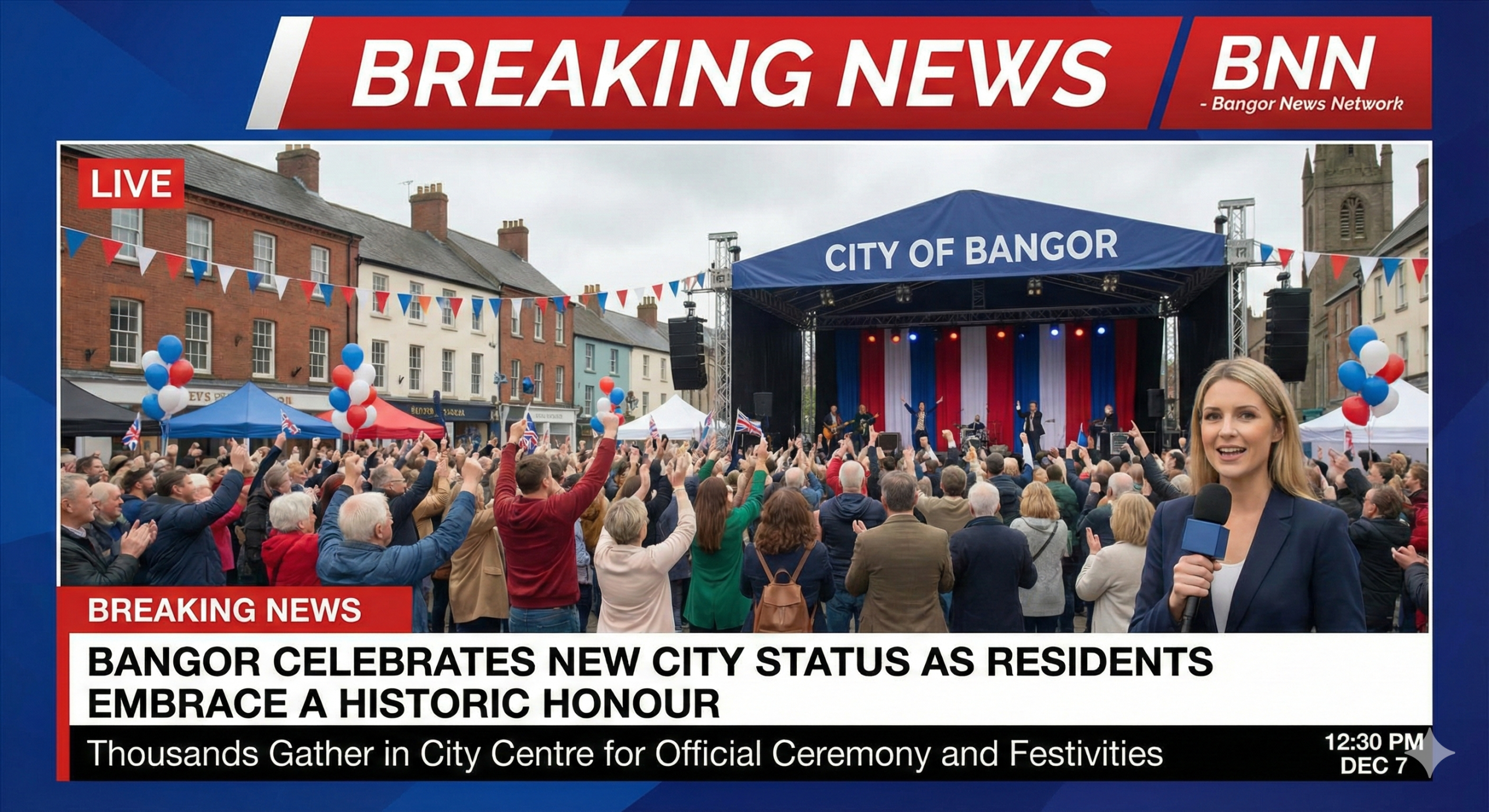
A Seaside Community Steps Into a New Era
Bangor, the well-loved coastal town in County Down, has officially been granted city status as part of celebrations marking the Queen’s Platinum Jubilee — a distinction that has reignited local pride and stirred a sense of renewed possibility. The announcement placed Bangor among eight successful locations across the UK and beyond, following a competitive civic honours process. For residents and community leaders, the recognition feels both symbolic and deeply personal, reflecting centuries of heritage and an enduring spirit that has carried the town through significant historical milestones.
Community Reaction: Pride and Optimism
Local Leaders Voice Enthusiasm
The response across Bangor has been overwhelmingly positive, with many residents describing the moment as a long-awaited affirmation of what they have always believed the area represents. Geoff Thompson, president of Bangor’s Chamber of Commerce, captured the mood with enthusiasm, observing that the town looked especially impressive the morning the news was announced. He emphasized the importance of the award for raising Bangor’s profile, noting that early feedback had been “very positive” and that residents were eager to embrace their town’s new identity.
“There’s a real sense of pride,” he said, reflecting a sentiment shared widely across the community. Many locals expressed excitement not only about the title itself but about the opportunities it may bring — from tourism growth to increased investment and regeneration efforts that have been years in the making.
A Place With Deep Royal Ties
DUP MLA Stephen Dunne echoed that excitement, highlighting Bangor’s appeal as a place to live, work, and visit. He praised its scenic marina, its coastal walking routes, its independent businesses, and its strong educational offerings. Dunne also underscored Bangor’s longstanding royal connections, noting that the newly named city has hosted several royal visits, particularly given its rich maritime history. To him, the new recognition fits naturally with the town’s past, present, and future.
Bangor Ulster Unionist councillor Craig Blaney went further, calling the transformation a catalyst for new opportunities, particularly for younger generations. Having lived in Bangor his entire life, he described himself as more optimistic than ever about what lies ahead. His comments reflect a widespread belief that the new status could accelerate ongoing development plans and inspire further community-driven initiatives.
A Jubilee Honour With Historic Significance
“Extra Special” Recognition for a Place With Heritage
Mark Brooks, Mayor of Ards and North Down Borough Council, described the announcement as “extra special,” given its connection to the Platinum Jubilee festivities. He noted that city status is not tied to population size or specific architectural features such as cathedrals; instead, it represents heritage, pride, and potential — three qualities that Bangor demonstrated in abundance throughout the application process.
Brooks expressed gratitude to everyone involved in preparing Bangor’s submission, emphasizing that the bid reflected not just written endorsements but also the tangible, ongoing work carried out across the community. He framed the win as a meaningful boost for the borough, one that acknowledges both Bangor’s past achievements and its modern ambitions.
The Foundations of Bangor’s Winning Bid
Built on Heritage, Heart, and Hope
Bangor’s application for city status was anchored in three central themes: heritage, heart, and hope. These pillars painted a comprehensive portrait of a town shaped by early Christian history, industrious development, cultural evolution, and a distinctive maritime character.
The heritage component underscored Bangor’s medieval monastic origins and its important role in Christian scholarship. These roots, together with centuries of innovation and economic activity, helped build a compelling case for the town’s historical significance. Its busy harbour and strategic position at the entrance to Belfast Lough also highlighted Bangor’s longstanding naval importance.
A Wartime Legacy That Endures
Bangor’s role during the Second World War stands out as one of the most compelling aspects of its historical narrative. In May 1944, General Dwight D. Eisenhower addressed 30,000 Allied troops in the town just before vessels departed for Normandy and the D-Day landings. The speech, delivered on Bangor’s shores, remains a defining moment in both local and global history — a reminder of the town’s strategic value and the critical part it played in supporting the Allied effort.
This wartime legacy continues to shape the area’s identity, reflected in its memorials, museums, and the stories preserved by generations of residents.
A Royal Connection Spanning Decades
Visits That Shaped Bangor’s Relationship With the Crown
Bangor’s new status also acknowledges its deep royal ties, which span more than a century. In 1961, Queen Elizabeth II and the Duke of Edinburgh visited Bangor Castle before joining a lunch at the Royal Ulster Yacht Club. Later that day, Prince Philip even took part in a regatta race — a moment still recalled fondly by long-time residents.
Further back, in 1903, King Edward VII and Queen Alexandra sailed from Bangor’s harbour on the Royal Yacht as part of coronation-related travels throughout Ireland. These visits helped solidify the town’s place within the broader framework of royal engagements, reinforcing its cultural and ceremonial relevance.
A Community Defined by Service and Solidarity
Honouring Those Who Care for Others
While Bangor’s historical and royal connections helped strengthen its bid, its modern identity is equally shaped by community spirit. One notable example came in 2018, when the local council awarded “freemen of the borough” honours to health and social care workers — the first such recognition of its kind in Northern Ireland. That decision highlighted Bangor’s appreciation for public service and reflected a collective ethos rooted in compassion, solidarity, and civic pride.
This sense of togetherness, many believe, played a key role in showcasing Bangor as a place defined not just by its past but by its people.
National Perspective on Bangor’s Achievement
A Boost for Tourism and the Economy
Secretary of State for Northern Ireland Brandon Lewis welcomed the outcome, describing Bangor as a community-oriented location with natural beauty, a thriving marina, and an increasingly vibrant arts and cultural sector. He expressed confidence that the new city status would boost tourism and economic growth, opening fresh opportunities for businesses and residents alike.
According to Lewis, the honour is not just ceremonial; it has the potential to serve as a catalyst for positive change across the region.
A Historic Competition Marks New Milestones
Record Number of Newly Named Cities
This year’s Platinum Jubilee competition resulted in a record eight locations being awarded city status. The previous contest, held ten years earlier to mark the Diamond Jubilee, saw far fewer winners. Notably, the 2022 competition was the first to accept entries from Crown Dependencies and British Overseas Territories. This shift expanded the field significantly and led to Stanley in the Falkland Islands and Douglas on the Isle of Man achieving city designation.
The remaining newly named cities — Colchester, Doncaster, and Milton Keynes in England; Dunfermline in Scotland; and Wrexham in Wales — now join Bangor in celebrating a rare honour that carries considerable symbolic weight.
Looking Ahead: A City With Momentum
Bangor’s new title represents not only a celebration of its past but an invitation to envision its future. For residents, civic leaders, and local businesses, the recognition serves as a reminder of the town’s resilience, creativity, and capacity for renewal. As Bangor transitions from seaside town to newly named city, the sense of pride shared by its community suggests the beginning of a new chapter — one defined by opportunity, ambition, and continued connection to the heritage that shaped it.
Leave a Reply