
Introduction: A Major Step Toward Smarter Urban Mobility
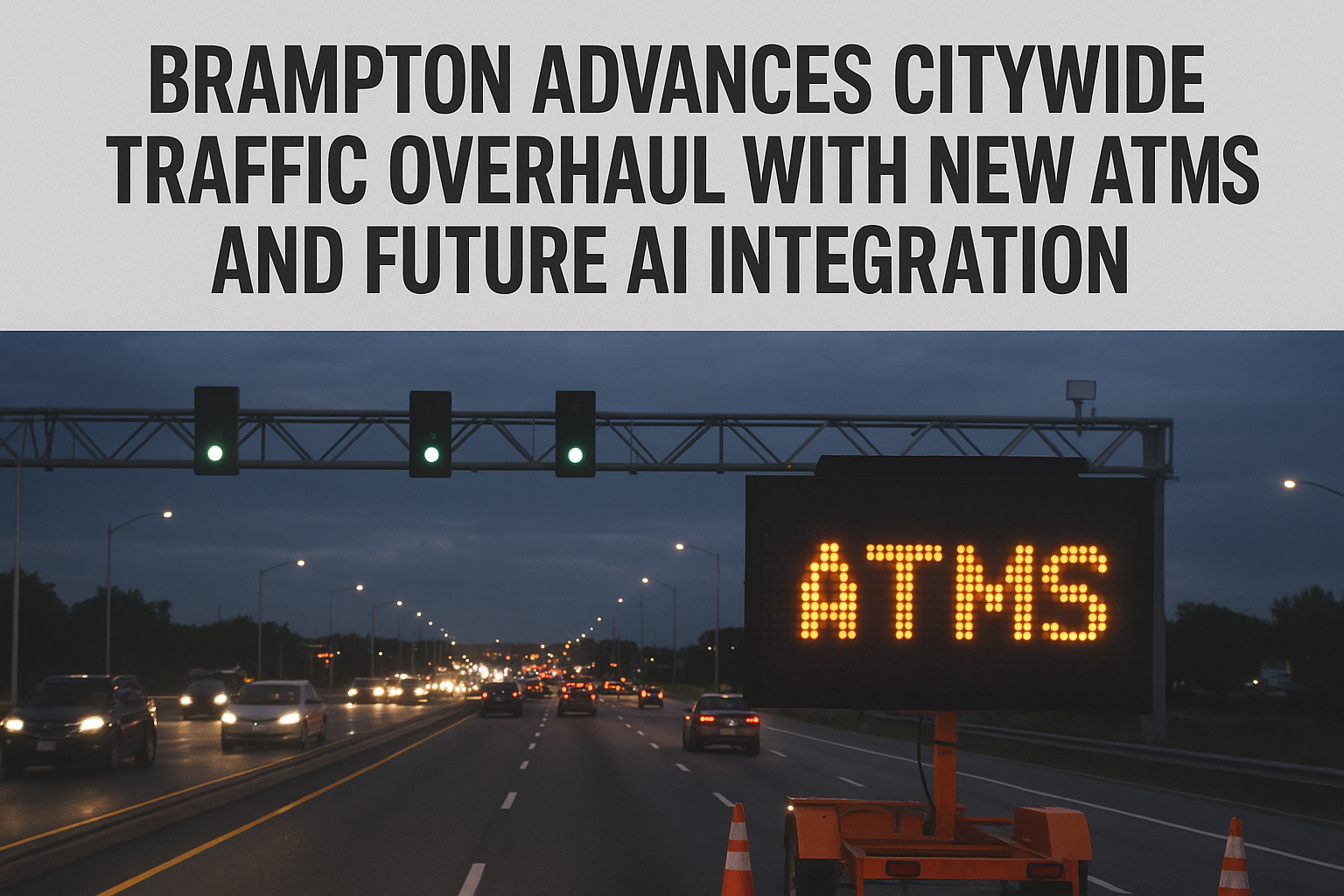
The City of Brampton is entering a pivotal phase in its long-term transportation strategy as it rolls out a new Advanced Traffic Management System (ATMS) designed to modernize how traffic signals operate across the growing municipality. The system, expected to be fully operational by the end of the second quarter of 2026, aims to improve traffic flow, reduce congestion, and enhance road safety for motorists, cyclists, and pedestrians alike.
Alongside this upgrade, Brampton is also preparing to revisit the potential of adaptive artificial intelligence (AI) technologies—tools that can automatically adjust traffic signals based on real-time conditions. Although early trials of AI-based signal management were halted due to technical challenges, city officials say they remain optimistic about future implementation once the technology matures.
This major upgrade comes at a time when Brampton continues to expand rapidly and requires modern infrastructure capable of handling its increasing transportation demands.
Modernizing Brampton’s Traffic Infrastructure
Replacing an Outdated System
During a detailed presentation to Brampton City Council on November 26, Shane Loftus from the Public Works and Engineering Department emphasized that the city’s current traffic light system has reached the end of its functional lifespan.
According to Loftus, the ATMS being installed will serve as the “nervous system” of Brampton’s traffic operations—connecting sensors, communication hubs, and intersection controllers across the entire city.
Key Functions of the New ATMS
The upcoming system will introduce several capabilities absent from Brampton’s existing infrastructure:
-
Real-time monitoring of intersections
-
Remote signal adjustments by city staff
-
Centralized connectivity across all signalized intersections
-
Improved data accuracy for traffic analysis
-
Prebuilt capacity for future adaptive technologies
Loftus explained that once the system is established, traffic signals will be able to respond more intelligently to data inputs—from vehicle counts to pedestrian activity—enabling dynamic decision-making that can ease congestion and improve flow on major corridors.
Citywide Deployment Timeline
Phase 1: Priority Intersections and LRT Route
Brampton staff anticipate that initial installations will be completed throughout 2025, beginning with 16 intersections located along the future Hurontario LRT route. In addition, 292 high-priority intersections across the city will transition to the ATMS by the end of the first quarter of 2026.
These locations were selected based on traffic volume, transit use, safety considerations, and the need for advanced monitoring.
Phase 2: Full Network Integration
The remaining 292 intersections—many situated along major transit corridors—are expected to migrate to the system by the end of the second quarter of 2026.
Once completed, every signalized intersection in Brampton will operate within a unified digital environment, laying the foundation for potential AI-powered optimizations in the years to come.
Brampton’s Experience with Adaptive AI Technology
Early Pilots Show Promise but Face Limitations
Brampton was among the Canadian municipalities that began experimenting early with adaptive AI to determine whether such technology could automatically optimize traffic signal timings based on real-time conditions. Two pilot programs launched in 2023 and 2024 showcased both intriguing potential and significant technological challenges.
The 2023 Pilot: Williams Parkway and Graymar Road
The city installed cloud-based adaptive signal detection hardware and software to enhance pedestrian and cyclist safety at a busy trail crossing. The goal was to determine whether AI could accurately detect vulnerable road users and adjust signal timing accordingly.
The 2024 Pilot: Sandalwood Parkway and Chinguacousy Road
A second pilot introduced AI-powered video analytics and light detection technology for improved traffic flow and collision prevention. This intersection is historically busy, making it an ideal testing ground for advanced data collection systems.
Weather Challenges Lead to Cancellation
Despite promising early results, both pilot projects were ultimately discontinued. Loftus explained that factors such as heavy rain, snow, low visibility, and sun glare interfered with the technology’s accuracy—particularly in detecting and categorizing pedestrians, cyclists, and vehicles.
Because of these weather-related obstacles and limitations in existing AI models, the city concluded that it could not safely expand the pilot programs at that time.
Looking Ahead: Future of AI in Brampton’s Traffic Network
Renewed Interest Once Technology Evolves
City officials stress that the cancellation of earlier pilots does not indicate a lack of interest in AI-enhanced traffic management. Instead, Brampton is choosing a cautious approach, waiting for more reliable models and better hardware to emerge.
Loftus reaffirmed that once the new ATMS is deployed across a significant number of intersections—expected by mid-2026—the city will be positioned to revisit adaptive AI solutions.
Evaluating New Opportunities
Over the next year, Brampton will work closely with its technology vendors to:
-
Identify intersections most suitable for future AI pilots
-
Test newly developed adaptive algorithms
-
Assess improvements in detection accuracy and weather resilience
-
Explore cloud-based versus edge-based processing options
-
Prepare the network for advanced analytics and automation tools
With the foundational infrastructure nearly in place, the next generation of AI advancements may finally align with Brampton’s long-term traffic strategy.
Why ATMS and AI Matter for Brampton Residents
Making Roads Safer and More Efficient
As one of Canada’s fastest-growing cities, Brampton faces significant pressure on its transportation network. The new ATMS is expected to:
-
Reduce travel times on major corridors
-
Improve pedestrian and cyclist safety
-
Enhance emergency response coordination
-
Provide data to guide future infrastructure planning
-
Reduce emissions from idling vehicles
Supporting Transit Expansion
With major investments such as the Hurontario LRT underway, an upgraded traffic management system will ensure signals can integrate seamlessly with transit priorities, bus rapid transit corridors, and future mobility initiatives.
Conclusion: A Forward-Looking Vision for Traffic Management
Brampton’s decision to overhaul its traffic management infrastructure marks an important milestone in the city’s commitment to creating a safer, smarter, and more efficient transportation network. While early attempts to incorporate adaptive AI faced setbacks, city officials remain confident that continued advances in technology will eventually make these tools effective and reliable.
By mid-2026, with a citywide ATMS fully operational, Brampton will be well-positioned to launch new AI trials, gather high-quality data, and gradually move toward a future where traffic signals respond intelligently to real-time conditions. The transformation may be phased, but the direction is clear: Brampton is building a modern transportation system designed for a rapidly growing urban centre and the decades ahead.
Leave a Reply