
Introduction
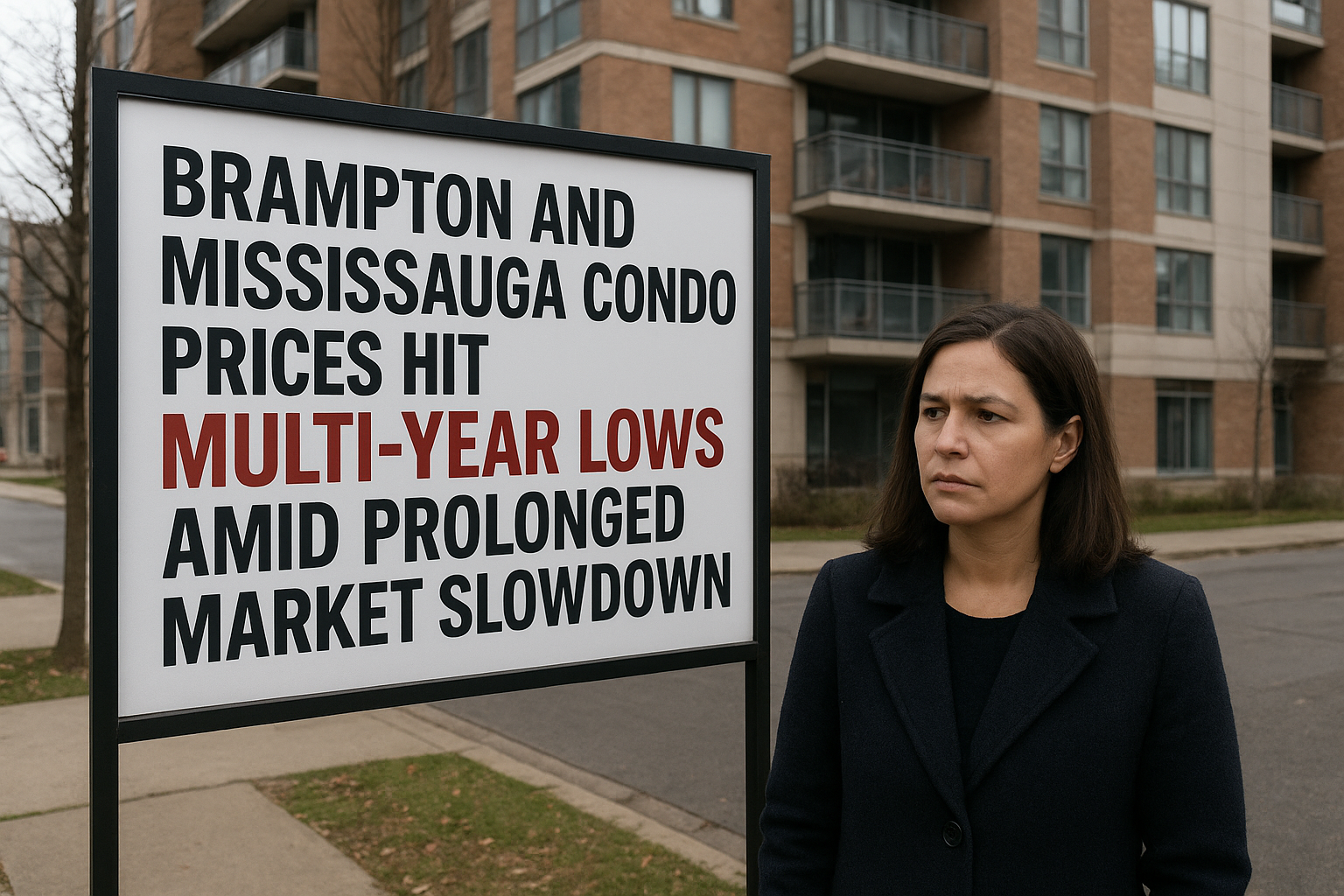
The real estate landscape in Peel Region has shifted dramatically in 2025, with condo prices in both Brampton and Mississauga falling to their lowest levels since the early months of the pandemic. According to the latest market figures released by the Toronto Regional Real Estate Board (TRREB), the steady downturn in average selling prices—particularly within the condominium apartment category—signals a broader reset in two of the Greater Toronto Area’s (GTA) most active housing markets.
While the GTA as a whole continues to grapple with affordability pressures, elevated borrowing costs, and uncertain economic conditions, the sharp decline in condo values across these neighbouring cities is drawing the attention of buyers, sellers, and market analysts alike. The data reveal a significant shift in demand patterns, with many potential purchasers waiting on the sidelines and investors reassessing their long-term strategies.
Condo Market Weakens Across Peel Region
Prices Fall to Lowest Point in Years
TRREB’s recent sales report confirms that average condo apartment prices in both Brampton and Mississauga have declined to levels not seen since the pandemic era. While price fluctuations are not unusual in the region’s dynamic real estate market, the sustained downward trend throughout 2025 marks a noteworthy change in market sentiment.
Industry experts say the decline is driven by a combination of lower buyer confidence, rising inventory, and hesitation brought on by persistent interest-rate pressures. Although the Bank of Canada has taken a cautious approach to rate adjustments through the year, borrowing costs remain significantly higher than the historic lows seen in 2020–2021—conditions that previously fuelled rapid price appreciation.
Impact of Slower Market Activity
The cooling trend has not been confined to condos alone. Detached, semi-detached, and townhouse segments have also experienced softer demand, though their price drops have been less pronounced than those seen in the condominium category.
Condo apartments, traditionally the most affordable entry point for first-time homebuyers in the region, have proven more sensitive to economic headwinds. With more listings hitting the market each month and fewer active buyers competing for units, the environment has shifted decisively in favour of purchasers.
Why Are Condo Prices Declining?
Higher Borrowing Costs Continue to Shape Buyer Behaviour
One of the dominant drivers behind the price decline is the cost of borrowing. Even modest interest rate increases have a disproportionate impact on condo buyers, many of whom operate within tighter budget constraints compared to detached-home purchasers. When mortgage payments rise, demand naturally cools—especially among first-time buyers.
Real estate economists note that many individuals who might otherwise consider purchasing a condo are pausing their plans until either interest rates decrease further or prices stabilize. This shift in behaviour has contributed to a buildup of unsold inventory, adding downward pressure on prices.
Investor Pullback Intensifies
Another significant factor is the growing reluctance among small-scale investors. For years, condos in Mississauga and Brampton were favoured investment properties due to their relative affordability and strong rental demand. However, higher mortgage rates have eroded profitability, particularly for investors relying on rent to offset monthly carrying costs.
Some investors are opting to sell existing units rather than acquire new ones, increasing supply in a market where buyer activity is already subdued.
Mississauga: A Market Losing Momentum
Former High-Demand Hub Sees Sharp Correction
Mississauga, once considered one of the most desirable and active condo markets in the GTA, has undergone a notable correction in 2025. Its city centre—home to the iconic Square One district and numerous high-rise developments—has been particularly affected.
As more units from previously launched preconstruction projects reach occupancy, the resale market has become crowded. Combined with softer demand, this has led to price reductions that stand out even in comparison with other GTA markets.
Increased Choice for Buyers
For prospective buyers, the silver lining is the increased variety of condos available at more competitive prices. Those who were previously priced out of Mississauga’s booming market now have a rare opportunity to enter the market at a more accessible price point. Real estate agents report that units which once received multiple offers are now sitting longer, giving buyers greater bargaining power and flexibility.
Brampton: Affordability Improves but Signals Mixed Market Conditions
Market Sees Gradual Yet Consistent Price Declines
Brampton’s condo market has followed a similar downward trajectory, with average prices sliding steadily throughout 2025. Historically, Brampton’s condo sector has been smaller than Mississauga’s but has grown significantly over the past decade as developers respond to population growth and housing demand.
The recent price drop is partly attributed to a surge in new listings coupled with reduced purchasing activity. Some sellers have adjusted expectations in response to prolonged listing times, contributing to deeper price cuts.
First-Time Buyers Reconsidering Their Options
For first-time homebuyers, Brampton’s lower prices present a compelling advantage compared to both Mississauga and Toronto. However, uncertainty—driven by macroeconomic factors—has prevented many from making definitive moves. Some prefer to save longer, anticipating further price reductions or improved lending conditions.
Despite the hesitation, realtors expect that the dip in Brampton condo prices will eventually reenergize buyer interest, particularly among young families transitioning from rental housing.
Market Experts Predict Slow Recovery, Not Immediate Rebound
Outlook for 2026
Analysts maintain that while the condo market in Brampton and Mississauga has cooled significantly, the decline does not indicate a long-term collapse. Instead, the trends point to a market correction after years of rapid appreciation.
TRREB economists suggest that prices may stabilize sometime in 2026, depending on external factors such as interest rate movements, employment stability, and consumer confidence. If borrowing costs ease as projected, demand for condos—especially from first-time buyers and investors—could rebound gradually.
What Sellers Should Expect
Sellers in both cities are advised to adopt realistic pricing strategies and prepare for potentially longer listing timelines. Industry professionals emphasize that while demand has softened, condos in well-maintained buildings and desirable locations remain competitive when priced appropriately.
Opportunities for Buyers
On the buyer side, the current market provides a rare opening. Those with stable employment and solid financial footing may find 2025–2026 an ideal time to purchase a condo at prices unseen in several years. With more negotiation room and less competition, buyers have the chance to secure strong long-term value.
Conclusion: A Market Reset Rather Than a Downturn
Condo prices in Brampton and Mississauga reaching multi-year lows is a significant milestone—but not one without context. The decline represents a broader recalibration of the housing market as it adjusts to economic realties, shifting buyer priorities, and the lingering effects of elevated interest rates.
As both cities navigate these changes, the coming year will be crucial in determining how quickly confidence returns. For now, the Peel Region condo market stands at a crossroads—offering challenges for sellers but considerable opportunities for buyers ready to take advantage of historically favourable conditions.
Leave a Reply