
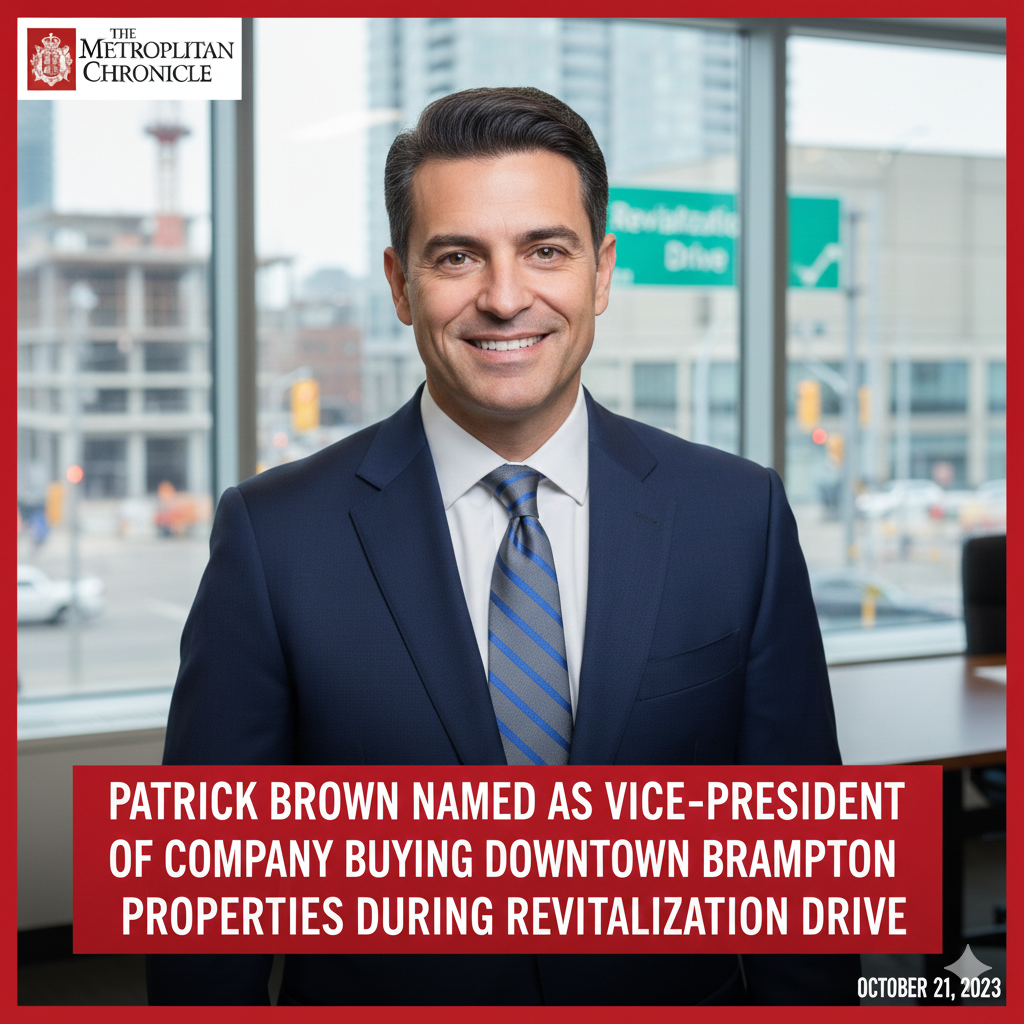
The recent purchase of two downtown Brampton properties by a numbered company connected to Mayor Patrick Brown has drawn public attention, coming at a time when city council is heavily investing in the revitalization of the city’s historic core. The transaction, disclosed through corporate records, shows the mayor listed as vice-president of the company, while his wife is identified as its president. Although the mayor has emphasized that the purchase should not raise concerns, the timing and location of the acquisition have sparked discussion among residents and observers.
Property Purchase Amid Downtown Renewal Efforts
A numbered company registered in Ontario and linked to Mayor Patrick Brown and his wife finalized the purchase of two adjoining properties on Main Street in July for a combined total of $1.45 million. The acquisition coincides with Brampton city council’s broader push to redevelop and reinvigorate the downtown area, an initiative that has involved significant public investment and long-term planning.
The properties are located near the intersection of Main Street and Queen Street, commonly referred to as the “Four Corners,” one of the most recognizable and historically significant areas in the city. The site sits at the centre of ongoing discussions about economic growth, housing density, and cultural development in downtown Brampton.
Details of the Acquired Properties
The two buildings purchased by the numbered company include commercial storefronts at street level, with residential apartments occupying the second floors. Such mixed-use properties are increasingly viewed as key components of downtown revitalization strategies, as they encourage foot traffic, support local businesses, and contribute to urban density.
The location places the properties within close proximity to major municipal landmarks, transit routes, and future development plans outlined by city council. As Brampton continues to reshape its downtown core, properties in this area are widely seen as strategically valuable.
Corporate Records and Leadership Roles
According to public corporate filings, Mayor Patrick Brown is listed as vice-president of the numbered company that purchased the properties, while his wife is named as the company’s president. Numbered companies are a common vehicle for real estate transactions in Ontario and often provide privacy for owners while remaining compliant with legal and regulatory requirements.
The presence of the mayor’s name in the corporate documentation has prompted questions from residents about transparency, potential conflicts of interest, and the separation between public office and private investment.
Mayor Responds to Concerns
Mayor Brown has stated that the purchase should not concern Brampton residents. He has maintained that the investment is a private matter and does not conflict with his responsibilities as mayor. Brown has previously emphasized that he follows all required rules and disclosure obligations related to his role in municipal government.
In public comments, the mayor has suggested that private investment in downtown Brampton is a positive sign, reflecting confidence in the city’s future and supporting broader revitalization goals. He has also pointed to existing ethical guidelines that govern council members’ financial interests.
Downtown Brampton Revitalization: A Major Council Priority
City council has made revitalizing downtown Brampton one of its central policy objectives in recent years. The effort includes infrastructure upgrades, incentives for development, cultural programming, and strategies to attract businesses and residents back to the core.
Public Investment and Long-Term Vision
Brampton’s downtown revitalization plan involves millions of dollars in public spending aimed at improving streetscapes, enhancing public spaces, and encouraging mixed-use developments. Council has framed these investments as necessary to transform the downtown into a vibrant, walkable, and economically resilient area.
Key elements of the plan include increased housing density, support for local entrepreneurs, and the preservation of heritage buildings. The Four Corners area, where the recently purchased properties are located, has been highlighted as a focal point for this transformation.
Why Downtown Properties Matter
As public investment flows into the downtown core, property values and development opportunities can be affected. This dynamic often draws interest from private investors who see potential for long-term growth. While such interest can accelerate revitalization, it can also raise questions about equity, transparency, and the relationship between public decision-making and private benefit.
Public Reaction and Ongoing Discussion
The disclosure of the mayor’s involvement in the numbered company has prompted conversation among residents and on social media. Some have questioned whether elected officials should invest in areas directly impacted by council decisions, while others argue that private investment by local leaders demonstrates confidence in the city’s direction.
Calls for Transparency
Good governance experts often emphasize the importance of transparency and clear disclosure when elected officials have financial interests that intersect with public policy. While owning property is not uncommon for municipal leaders, public trust can depend on how openly such interests are communicated and managed.
In Brampton, residents have increasingly called for greater clarity around development decisions, particularly as the city undergoes rapid growth and change. The downtown revitalization project, given its scale and visibility, has become a focal point for these broader conversations.
Ethical Framework and Municipal Oversight
Municipal officials in Ontario are subject to codes of conduct and conflict-of-interest legislation designed to prevent misuse of public office for personal gain. These rules confirm that councillors and mayors must declare certain interests and recuse themselves from decisions where a conflict exists.
Understanding Conflict-of-Interest Rules
Under provincial legislation, a conflict of interest typically arises when an elected official stands to benefit financially from a decision made by council. In such cases, officials are required to disclose the interest and refrain from participating in related discussions or votes.
Mayor Brown has indicated that he is aware of these requirements and operates within their boundaries. Whether the downtown property purchase triggers any formal conflict depends on the nature of future council decisions and the specific interests involved.
Broader Implications for Downtown Development
The situation highlights a recurring challenge faced by growing cities: balancing public leadership with private investment in rapidly developing areas. As Brampton continues to expand, similar questions are likely to arise regarding who invests in the city and how those investments intersect with municipal policy.
The Role of Private Investment
Private capital plays a critical role in urban revitalization. Without it, many redevelopment projects would struggle to move forward. Supporters argue that encouraging local investment, even by public figures, can help anchor development and signal stability.
Critics, however, caution that safeguards must be in place to ensure decisions are made in the public interest and not influenced by personal financial considerations.
Conclusion: A Transaction Under Public Scrutiny
The purchase of two downtown Brampton properties by a numbered company linked to Mayor Patrick Brown and his wife has placed a spotlight on the intersection of private investment and public leadership. While the mayor has stated that residents should not be concerned, the timing of the acquisition amid a major downtown revitalization push has prompted discussion about transparency, ethics, and public trust.
As Brampton continues to reshape its downtown core, these conversations are likely to continue. The situation underscores the importance of clear ethical guidelines, open communication, and ongoing public engagement as the city navigates growth and redevelopment. For now, the property purchase remains a legal private transaction, but one that sits within a broader and highly visible effort to transform the heart of Brampton.
Leave a Reply